Setup
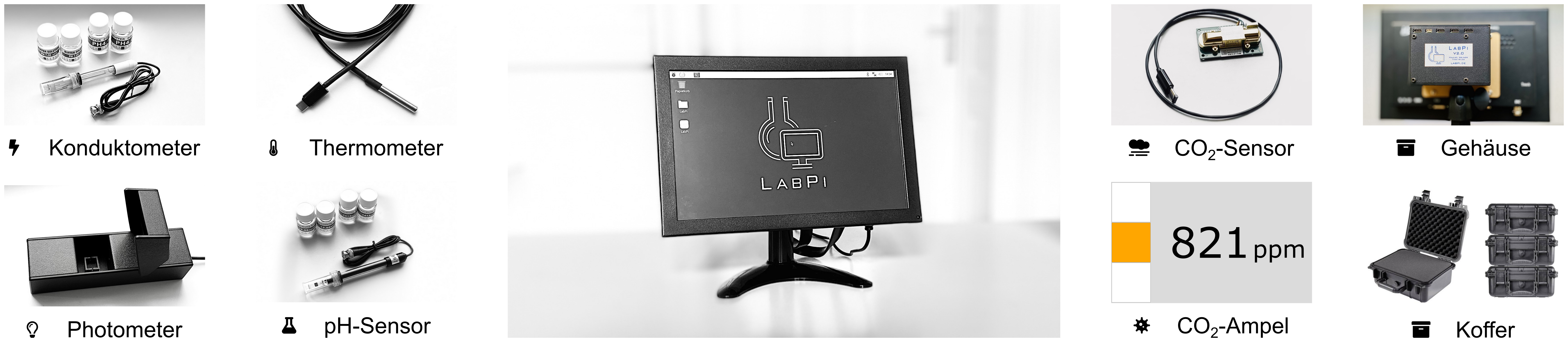
The core goal of LabPi is to expand the low-cost sector with a wide range of digital acquisition and analysis methods. Instead of isolated solutions for each measured variable, an open and adaptable platform was developed to which different sensors can be connected as needed. The LabPi measuring station therefore creates new experimental possibilities for schools, student laboratories and higher education, while requiring no programming and no advanced technical expertise.
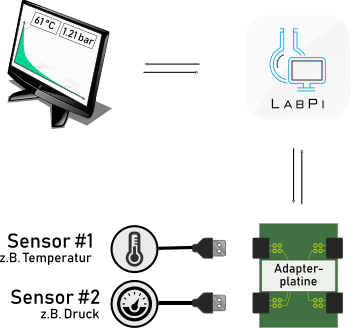
LabPi combines suitable mini computers with powerful miniature sensors. Its modular design allows many measured variables such as pH, conductivity, pressure and temperature to be recorded individually or in combination. The custom adapter board makes it as easy to connect and swap sensors as using USB sticks. Because low-cost components are used, hardware costs are reduced to a level where buying several stations, or even a full classroom set, becomes realistic for schools and student labs. LabPi can already record many relevant variables in STEM education (blue). Additional sensors are currently under development (yellow).

Analysis
Two key success factors determine whether digital tools work well in the classroom: high practical value and simple operation for teachers and learners.
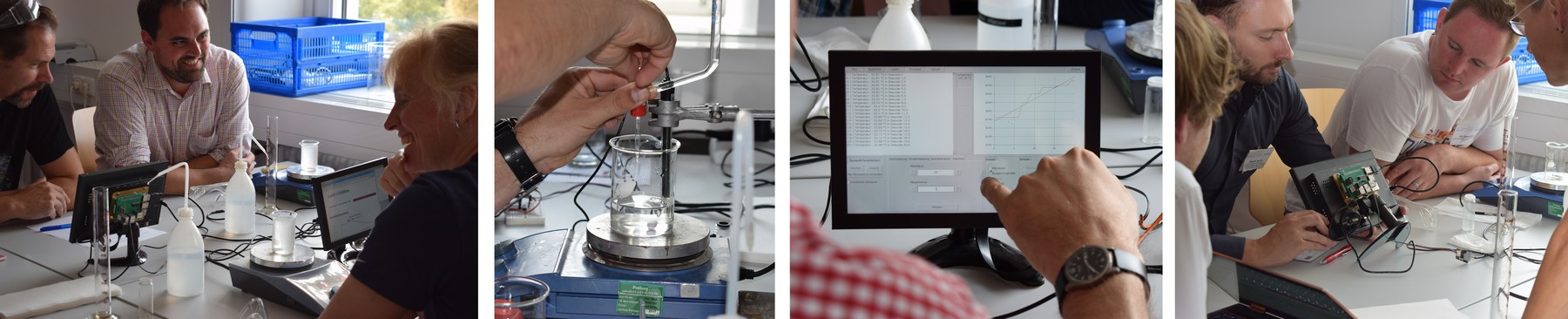
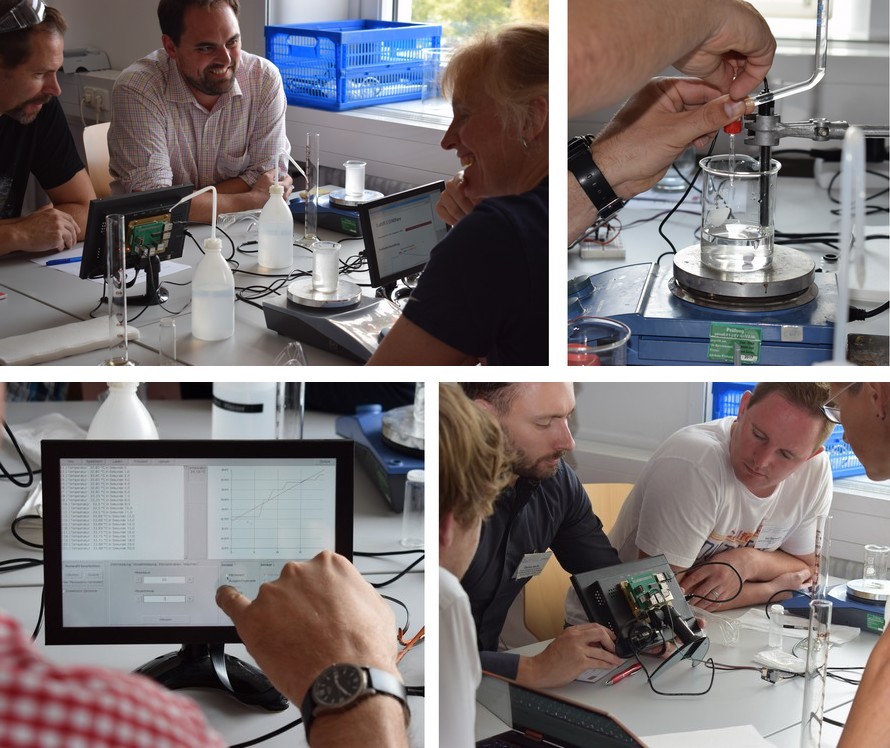
To ensure both factors, we designed and developed the LabPi software specifically for educational use. Necessary processes such as sensor recognition and driver integration run automatically in the background so that LabPi can be operated intuitively without lengthy familiarization. The graphical interface in the foreground allows the measured values of each sensor to be recorded easily, displayed in tables and charts, analyzed, saved and exported to common formats. Data acquisition therefore requires only a few mouse clicks or taps.
More details about the software design
In principle, the interface follows a consistent structure that is supplemented only slightly by measurement-specific options. In teaching, this design has the advantage that the software and the measuring station only need to be learned once and can then be transferred to other variables. Instead of repeated orientation phases for each new device, the focus shifts to the actual experiment and analysis, which leaves more effective learning time. If LabPi is also used in other subjects such as biology or physics, these synergies become even stronger.
For the analysis, the measured variables are displayed simultaneously in tabular and graphical form. In addition, mean values, regression lines and slopes can be shown and, if required, represented as functions. Research indicates that working with multiple representations supports deeper understanding, while frequent use of such representations also strengthens conceptual understanding. If more extensive analysis is needed or data should be archived for later use, the results can either be saved on the device or exported to a USB stick or the web platform for use in standard spreadsheet programs.
Connectivity
LabPi measuring stations can be connected via Wi-Fi to the accompanying COMPare cloud platform. This enables innovative teaching and learning scenarios for STEM education.
One concrete example is the joint analysis, discussion and evaluation of experimental results. Traditionally, the results of working groups are collected on the board or discussed at each table after the lab work, which usually costs either time or clarity. With LabPi, networking several measuring stations makes this much more efficient. Once connected, the measured values of all groups can be brought together in COMPare. This upgrades the analysis phase in terms of content and improves its time efficiency.
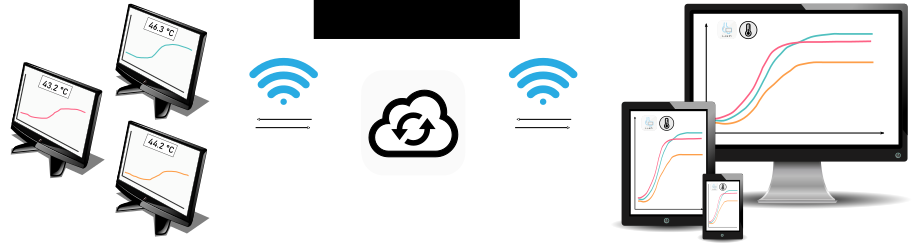
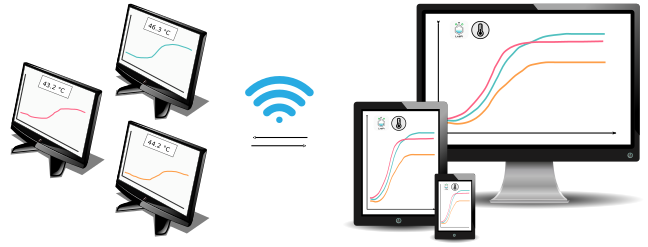
Students can therefore compare and analyze the results of all groups together. This allows them, in direct exchange with other groups and the teacher, to critically question their own results and independently identify errors in experimental procedure. In addition, the data can be stored not only locally on the device but, if desired, also in the cloud for long-term use. That way, results can later be retrieved and reused by other groups.
Practical example: COMPare
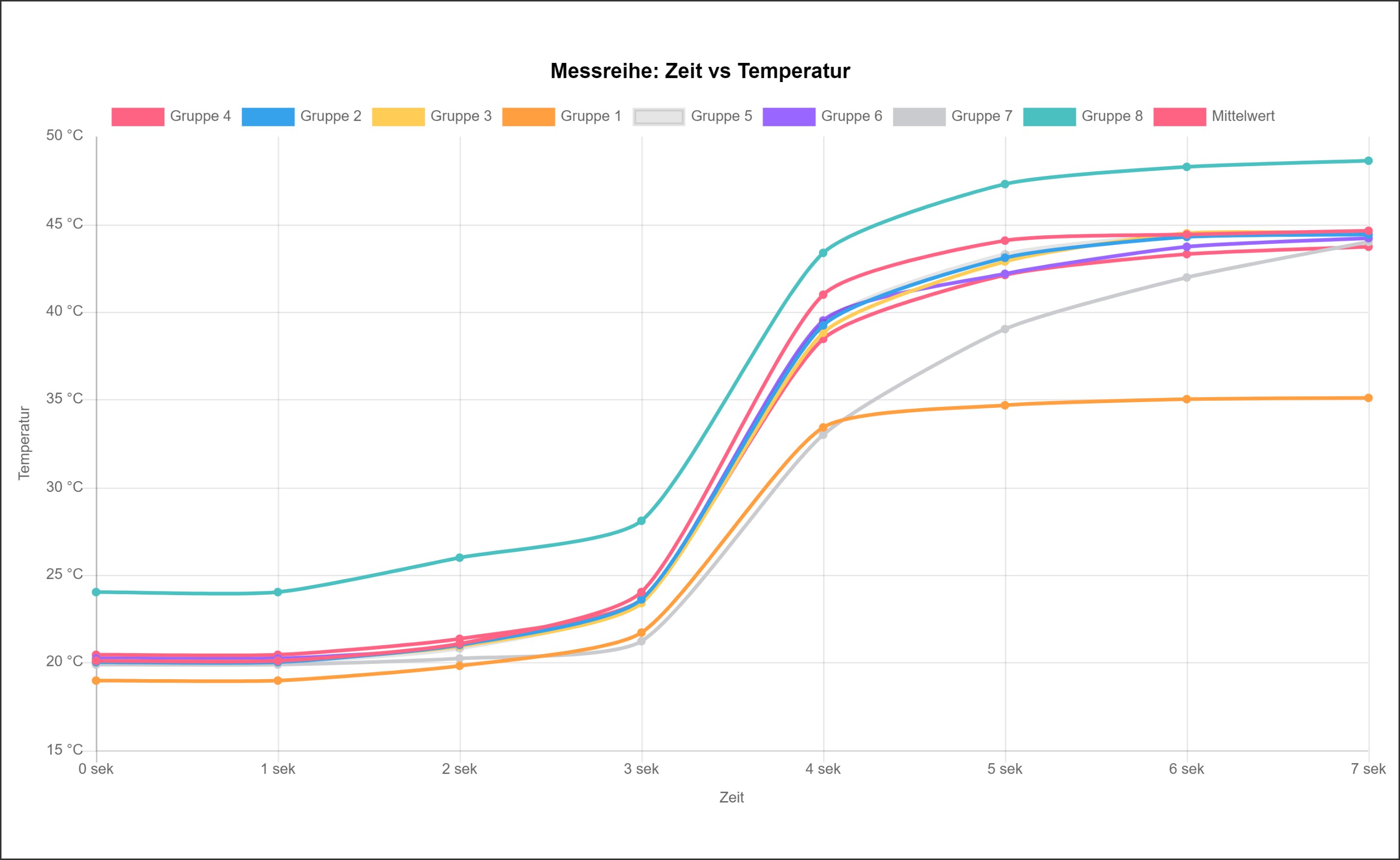
Exothermic dissolution of calcium chloride in water. Click on the group names to show or hide them.
You can view a demonstration of the free COMPare cloud platform here: LabPi COMPare